There is no single best cover-up style. The useful question is which visual language can absorb the old tattoo’s shape and darkness while still giving you something you want to wear.
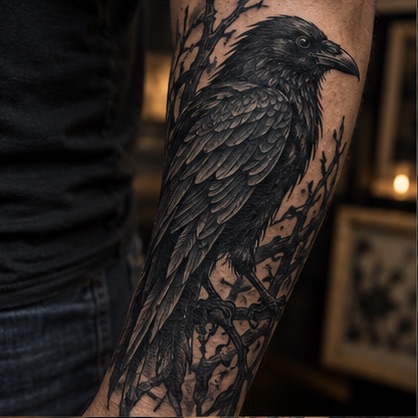
Blackwork and bold graphic designs
Blackwork can integrate dense old ink into intentional dark areas. Its strength is contrast and clear shape. A large black mass can also feel heavier than expected, so ask to see the design at full scale on your body placement.
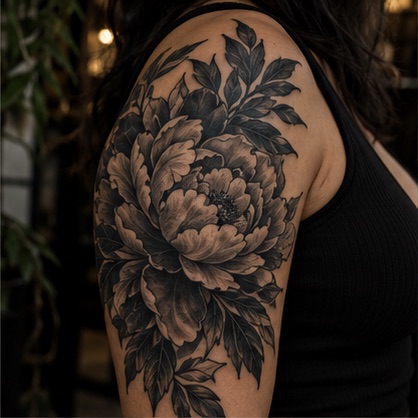
Floral and botanical designs
Petals, leaves and layered foliage create natural places for shadows and movement. They can help break up an awkward old outline. The amount of darkness needed still depends on the original tattoo; delicate petals alone may not hide a dense piece.
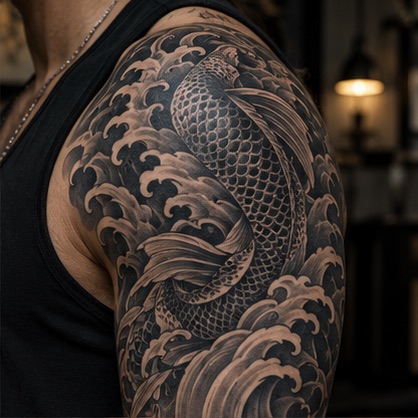
Japanese-inspired compositions
Large flowing elements such as waves, wind bars and foliage can give an artist room to incorporate existing ink. These designs often work best when you are open to a larger area rather than a small patch placed over the old tattoo.
Ornamental, geometric and fine-line work
These styles can work in selected cases, especially when the original tattoo is light or has been faded. Precise negative space and very fine lines leave less room to conceal a dark shape. Ask an artist to show how the old ink will sit beneath the proposed pattern.
Browse the style guide and cover-up ideas for visual directions to discuss in a consultation.
How to choose a style for the tattoo you have
Start with the original tattoo rather than a trend board. Mark its darkest areas, recognizable outlines, and any open skin around it. A suitable style offers a natural place for those dark shapes and enough contrast for the new design to read from a normal viewing distance. The old tattoo's size and location also matter: a style that works across a shoulder may feel crowded on a wrist. Bring a few favorite examples to an artist and ask them to map the old ink into each option.
Strong cover-ups usually use scale, directional flow, and varied values. A new piece may extend beyond the old boundary because a dark center needs lighter or less busy surroundings. This does not mean every cover-up must be solid black. It means the design needs a believable visual hierarchy. See our cover-up ideas gallery for motifs to test against your placement.
Blackwork: strongest contrast, boldest commitment
Blackwork can incorporate dense shapes into silhouettes, patterned areas, or heavy shading. It suits people who genuinely want a dark graphic piece and have enough space to make its edges intentional. A black panther, raven, abstract shape, or ornamental field can absorb old ink in different ways. Ask the artist to show the design at actual size, on a photo of your body, and to identify how much new solid black it requires.
The trade-off is visual weight. A design that looks elegant as a cropped close-up may dominate the whole limb. Solid dark areas also leave fewer future options. Review healed examples and discuss whether a partial blackwork approach with breathing room can achieve the same coverage.
Floral and botanical: flexible shapes, careful shading
Flowers, leaves, branches, and vines offer curves and layered shadows that can disrupt old lettering or uneven outlines. Dense leaves can carry the darkest old marks while lighter petals create a focal point elsewhere. Larger peonies, chrysanthemums, and leafy arrangements often allow more structural freedom than tiny fine-line flowers. The exact species matters less than the artist's ability to place shadows where the old tattoo needs them.
A delicate botanical concept cannot simply be laid over a saturated black block. Ask which parts of the old piece would sit beneath petals, whether they would show through after healing, and whether the plant needs to extend farther than you first imagined. If you want a very airy result, discuss laser lightening and dark tattoo limits before settling on a design.
Japanese-inspired compositions: room for movement
Waves, wind bars, clouds, koi, and large flowers can connect an old tattoo to a wider composition. Background elements give an artist places to distribute dark ink without making one small patch look overloaded. This can be useful when an existing tattoo has awkward proportions or sits near a joint. The approach often works best when you are open to a substantial area and an artist experienced in the visual tradition.
Ask to see the whole layout, not just a close-up of the covered section. The new flow should make sense from multiple angles as the body moves. A good artist will also explain where open skin is preserved so the composition remains readable after healing.
Ornamental and geometric: precision has limits
Mandala, geometric, and ornamental patterns can work when the old tattoo is small, faded, or located where a darker patterned center feels natural. Repeated shapes may distract from irregular lines. Yet precision can reveal imperfections: an old thick outline may interrupt a fine symmetrical pattern, and empty geometric cells can expose the original. Dense ornamental shading may be more practical than delicate line-only work.
Ask for a transparent overlay on a real photo and identify every old mark that remains outside a dark pattern element. If the artist cannot place those marks convincingly, choose a different pattern scale, broaden the design, or consider lightening first.
Color, realism, and fine-line work
Color can add depth and emphasis, but bright ink is not an opaque eraser for dark old pigment. Color realism may work when the composition includes naturally dark features and the artist has strong healed cover-up examples. Pale watercolor effects and fine-line-only designs tend to have less capacity for dense old ink. A line-only style may be a good fit for a lightly faded tattoo, especially after lightening, but it is rarely a simple solution for a solid dark shape.
Discuss how the palette may settle in your skin, whether a second session is likely, and how the piece will read at arm's length. Evaluate healed photos rather than relying on fresh, highly saturated images.
Cost and session planning by style
Price follows artist rate, size, detail, and time more than a style label. A larger Japanese-inspired composition may require several sessions; a smaller bold blackwork piece may require fewer but still demand careful design. A detailed botanical cover-up may need extensive planning to align its shaded areas. Ask for an estimate of drawing, tattooing, and possible touch-up costs, and confirm whether your deposit is applied to the total.
If the desired style depends on laser lightening, budget for a separate assessment and possible treatments. Do not choose a style only because a quote is lower. The key question is whether you would still want the new tattoo if the old tattoo were not underneath it.
Aftercare and healed results
Every style needs proper healing, and cover-ups deserve particular patience because visibility of the old ink is best judged after the new work settles. Follow the artist's aftercare instructions. Avoid picking, excessive friction, and sun exposure while healing as advised. Contact a healthcare professional about signs of infection or an unusual reaction. Once healed, compare the result with the artist's expected outcome and discuss whether a touch-up is appropriate.
At consultation, request healed examples in the style you want and ask how the original tattoo looked beforehand. That paired evidence is much more useful than a fresh after photo alone. Use our tattoo styles guide to shortlist options and the consultation checklist to prepare your questions.